
No loadouts. No Gulag. No Buy Stations. Treyarch isn't tweaking Warzone's formula for Black Ops Royale, it's gutting it. The new mode drops March 12 at 9PM PT as part of Season 2 Reloaded, and if you've spent the last few years muscle-memorising your loadout drops and Gulag clutches, none of that transfers here.
The pitch is a direct callback to Blackout, Black Ops 4's battle royale from 2018. One hundred players, 25 squads of four, wingsuits into Avalon, and whatever you find on the ground is what you're fighting with. Weapons come with fixed Build Archetypes and five-attachment upgrade paths; you raise their rarity by hunting down Attachment Kits, pushing guns from baseline up to Legendary. The gap between a grey pistol and a Legendary sniper rifle is real, which means the first two minutes of every match are going to be a frantic, chaotic scramble that punishes anyone who lands soft.
The Gulag Is Gone, But You're Not Necessarily Dead
Removing the Gulag is the decision that will generate the most friction. It's been the backbone of Warzone's second-chance identity since 2020, and plenty of players have built their entire playstyle around surviving it. Black Ops Royale replaces it with Redeploy Tokens and capturable Towers, which means your squad can bring you back, but only if they're in a position to do so. Die early with a squad that's already pinned down, and you're watching from the menu. That's a fundamentally different kind of pressure.
The perk system gets an overhaul too. Gone are the three fixed perk slots you'd pre-select in your loadout. Instead, perks are looted during the match as consumable boosts, lasting roughly two to four minutes each, with five swappable slots you can fill and trade with squadmates on the fly. It's the Blackout perk system, not the Warzone one, and it means a Ghost perk isn't a permanent safety blanket; it's a timed resource you burn when you need it.
Treyarch also announced a new ballistics system that increases bullet drop across the board, similar to how Blackout handled long-range engagements. Weapon rarity directly affects bullet velocity, so a Legendary sniper behaves meaningfully differently from a Common one. Snipers get their velocity bump at Uncommon and Epic tiers; other weapon classes improve at Rare and Legendary. In practice, this means long-range fights will demand actual adjustment rather than point-and-click, and players who hoard upgrade kits will have a genuine mechanical advantage over those who don't.
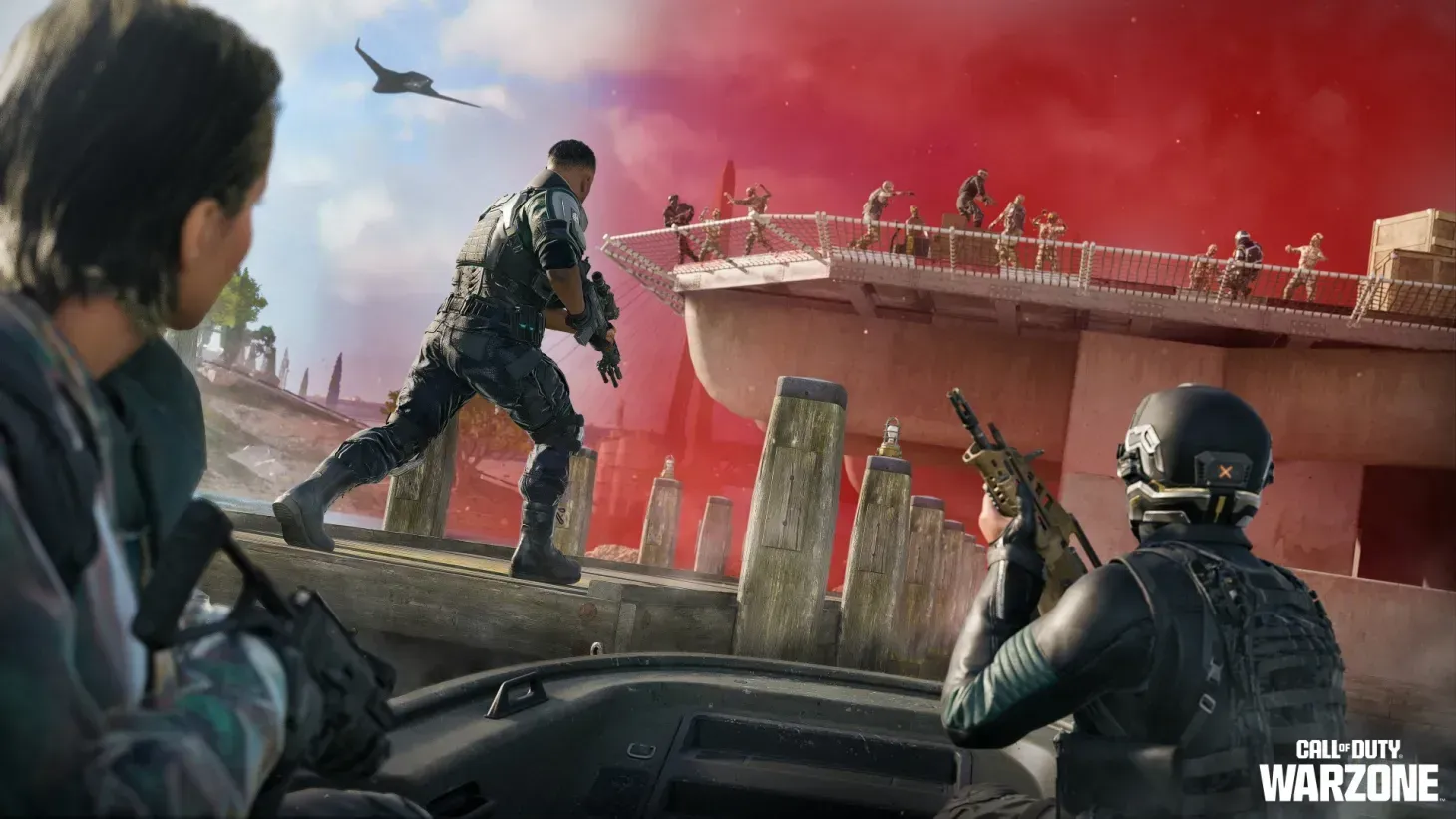
Avalon itself has been modified for the mode. The POI breakdown shows swimmable waterways, tidal flats you can cross on foot, and wall-jumping via Omnimovement, plus land, sea, and air vehicles. Cradle Breaches add a PvE wrinkle: red gas zones that spawn hallucinated zombie hordes and a Mangler Boss, with high-tier loot locked behind surviving them. Optional activities like bounties, Strongboxes, and Relay captures give squads ways to generate advantages beyond pure looting.
The returning equipment list, Grappling Hook, Sensor Dart, Trauma Kit, reads like a Blackout reunion tour. That's clearly intentional. Treyarch is making a direct appeal to the players who bounced off Warzone's loadout meta and never came back, and the design logic is sound. Whether the current Warzone playerbase, which has been trained for years to expect a custom AR with Overkill, actually wants to play a mode where they might spend ten minutes with a blue SMG they didn't choose is a different question entirely.
Black Ops Royale also feeds into the cross-mode Counter Skies Event Pass running March 17 through April 2, with the Swordfish A1, operator skins, and new attachments on offer. The full deep dive has every mechanic detailed if you want to prep before Thursday night. Warzone has tried a lot of things to recapture old momentum. Removing its two most recognisable systems is the boldest swing yet.
Want to see more? Catch all the latest gaming news, updates, and patch notes right here at XP Gained!