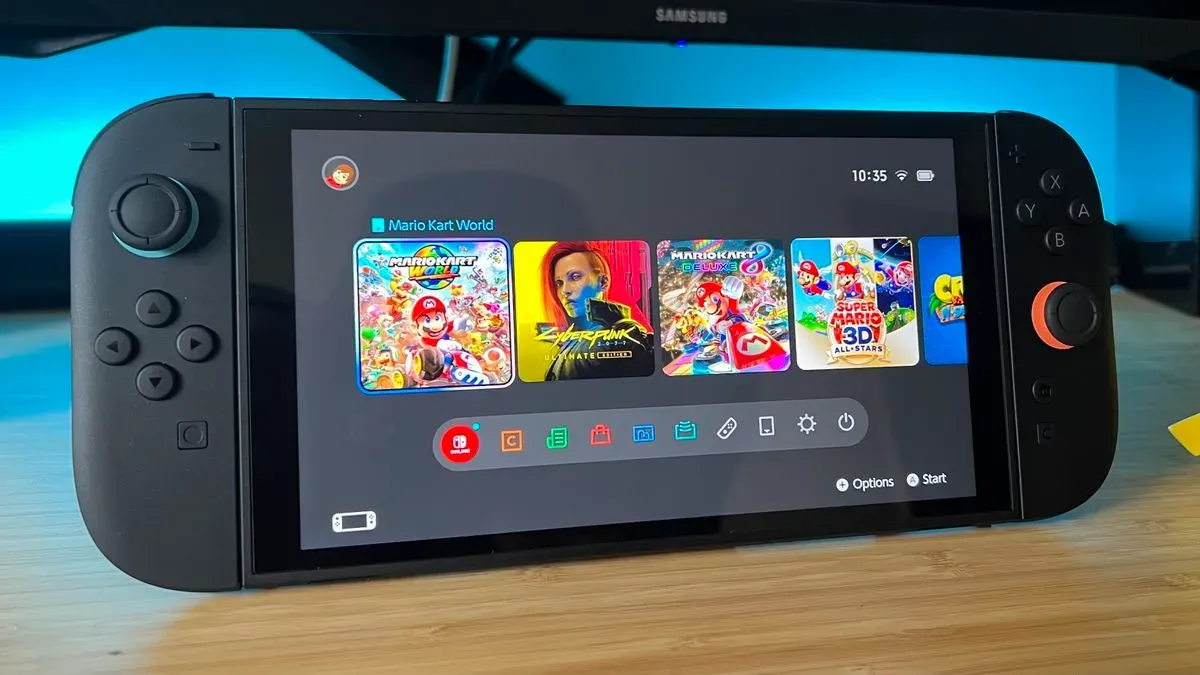

Nintendo dropped Switch 2 system update Ver. 22.0.0 on March 16, and buried in a list of GameChat tweaks and Airplane Mode quality-of-life changes is something genuinely worth talking about: a feature called Handheld Mode Boost that lets compatible original Switch games run at their docked resolution while you're playing in portable mode. No paid upgrade pack. No separate purchase. Just a toggle in your System Settings.
To understand why this matters, you need to remember how the original Switch handled performance. Most games ran at a lower resolution in handheld mode to preserve battery life, with the hardware bumping things up when docked. That was fine on the original hardware, but on Switch 2's larger, sharper screen, those handheld-mode compromises become a lot more visible. Handheld Mode Boost essentially tells the Switch 2 to stop pretending it's the weaker machine and run the game as if it's sitting in a dock. According to Nintendo's official description, this "causes the performance of Nintendo Switch software while undocked to run as if it were being played in TV mode," with the trade-off being increased power consumption.
The Results Are Already Impressive
Early testing by players on ResetERA paints a pretty clear picture of who wins here. Monster Hunter Rise is reportedly a "huge winner," looking dramatically sharper in portable play. Bayonetta 3, which was genuinely rough in handheld on the original Switch due to heavy dithering and a very low resolution, has apparently gone from borderline unplayable to a solid experience. Xenoblade Chronicles 2 might be the single most dramatic case: the oversharpening filter that plagued the game is gone, anti-aliasing is now present, and the characters look noticeably smoother and more natural. One X user, Aaron, posted side-by-side comparisons for Xenoblade Chronicles 2 showing the image quality jump, and the difference is not subtle.
Mario Kart 8 Deluxe is apparently "super sharp" with the boost active. Xenoblade Chronicles Definitive Edition is described as "so, SO much nicer." Dragon Quest XI S has also been shown running with the mode enabled. Not every game will see the same gains, and Nintendo's own notes acknowledge the effect varies by software, but the early results suggest a wide range of titles benefit meaningfully.
Credit where it's due: this is a genuinely consumer-friendly move from Nintendo. The Switch 2 already has paid upgrade packs for specific titles, and it would have been easy to lock this kind of performance improvement behind that same paywall. Instead, they've shipped it as a free firmware update that applies broadly across the back catalogue. That's not nothing, especially when you consider that some of these games, Bayonetta 3 in particular, were genuinely compromised experiences in handheld on the original hardware.
To enable it, you need to head into System Settings, find the System section, and look for Nintendo Switch Software Handling. The toggle is there. The original Switch also received its own Ver. 22.0.0 update on the same day, though that version doesn't include Handheld Mode Boost since the feature is specific to Switch 2's additional headroom. The Nintendo Switch App has also been updated to version 3.3.0 alongside this, adding the ability to view and edit friend notes from your phone.
Games like the Xenoblade titles will still benefit from a proper native Switch 2 patch at some point, and the performance ceiling of Handheld Mode Boost is ultimately limited by what the original code was built to do. But as a stopgap that costs players nothing and visibly improves a huge chunk of the existing library, this is exactly the kind of update that makes a backward-compatible platform worth owning.
Want to see more? Catch all the latest gaming news, updates, and patch notes right here at XP Gained!