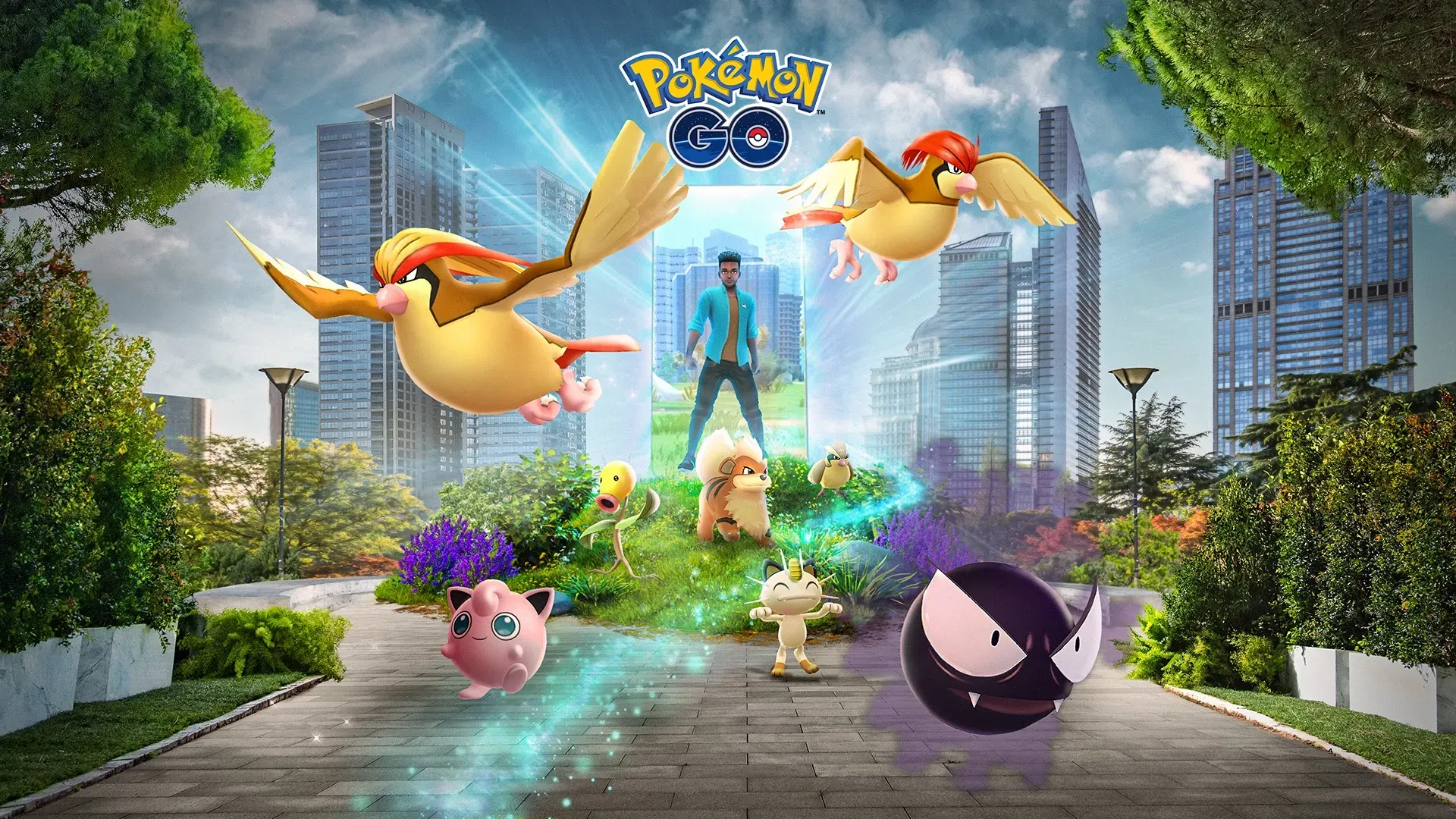

For years, Pokemon Go players pointed their phones at bus stops, storefronts, and park benches to complete Field Research tasks and pocket some in-game rewards. What Niantic didn't exactly advertise was where all that scanning was going. According to MIT Technology Review, more than 30 billion images and scans collected from Pokemon Go and Ingress players have been used to train Niantic's Visual Positioning System, which is now actively guiding Coco Robotics' fleet of autonomous food delivery bots through city streets.
The system, developed by Niantic Spatial (the company that spun off from Niantic following its sale to Scopely in 2025), gives those little pink robots centimeter-level positional accuracy in urban environments where standard GPS falls apart. Every scan players submitted captured not just a photo but GPS coordinates, camera angle, time of day, and weather conditions. Stack 30 billion of those on top of each other and you have a street-level spatial map that no mapping team could have built manually. Niantic Spatial CEO John Hanke put it plainly: "It turns out that getting Pikachu to realistically run around and getting Coco's robot to safely and accurately move through the world is actually the same problem."
To be fair to Niantic, this wasn't a secret operation in the darkest sense. The AR Mapping Field Research tasks that generated the data required players to opt in, and the scans were limited to publicly accessible locations. Player movement data and personal location history weren't part of it. Niantic disclosed back in 2024 that they were building an AI model from real-world geographic data, so the foundation was always visible to anyone paying attention. Most players weren't, obviously.
The Reaction Is More Interesting Than the Story
The Pokemon Go subreddit's response has been surprisingly good-natured, full of jokes about Pikachu training robots to navigate the real world. One comment captured the general vibe: mild amusement, not outrage. That reaction says something. When players first started hearing that Niantic was harvesting spatial data at scale, the speculation got dark fast. Delivery robots are, genuinely, a pretty benign outcome compared to what people feared.
But the benign use case doesn't close the conversation. Niantic Spatial now holds one of the most detailed pedestrian-level maps of urban environments ever assembled, built for free by a playerbase that thought they were hunting Pidgeys. The Coco Robotics partnership is what's been announced. It's not necessarily the ceiling of what that dataset can do, or who else it might be licensed to down the line. That's not paranoia; that's just reading the situation clearly.
The real question is whether players would have scanned quite so enthusiastically if the loading screen had said "help train commercial robotics" instead of "earn bonus Stardust." Probably not. And Niantic knows that. Credit where it's due: the opt-in structure and public-locations-only policy show some awareness of the line. But packaging a commercial data collection program inside a beloved game, and revealing its full purpose a decade later, is still a choice worth naming for what it is.
Coco's pink robots are already operating across cities in the US and Europe. The map powering them was built one PokeStop scan at a time, by players who had no idea they were doing it.
Want to see more? Catch all the latest gaming news, updates, and patch notes right here at XP Gained!