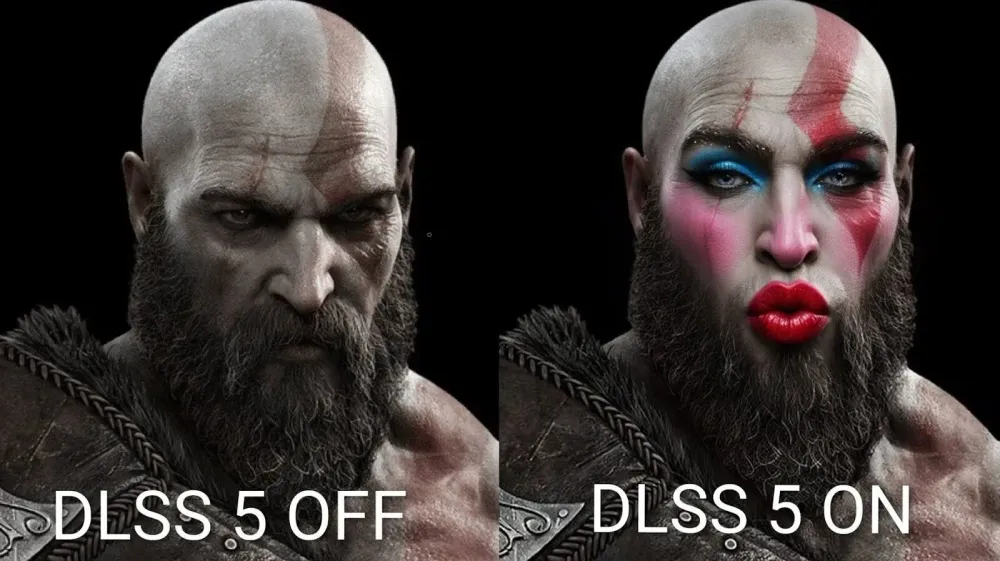


Jensen Huang had a chance to actually address the DLSS 5 backlash. Instead, at a press Q&A at GTC 2026, he opened with "Well, first of all, they're completely wrong." That's not a rebuttal. That's a CEO telling players and developers that their eyes are lying to them.
The criticism isn't fringe or uninformed. According to Tom's Hardware's Paul Alcorn, who put the question directly to Huang, the backlash has been widespread since Nvidia unveiled DLSS 5 on Monday. The announcement showed the technology dramatically altering character faces and environments in games including Resident Evil Requiem, Starfield, and Assassin's Creed Shadows. The results looked less like a lighting upgrade and more like someone ran the game through a beauty app. Smoother skin, different hair, altered makeup. People noticed immediately.
Steve Karolewics, a rendering engineer at Respawn, was blunt about it on social media: "DLSS 5 looks like an overbearing contrast, sharpness, and airbrush filter. Remarkably different frames with the rationale of photo-real lighting? Nah, I think I'll stick with the original artistic intent." That's not a random forum post. That's someone who works in rendering for a living.
Huang's actual argument is that DLSS 5 operates at the geometry level rather than as a post-process filter, and that developers retain full control over its implementation. "DLSS 5 fuses controllability of the geometry and textures and everything about the game with generative AI," he said. "It's not post-processing at the frame level, it's generative control at the geometry level. All of that is in the direct control of the game developer." He also suggested developers could use it to create effects like a toon shader or make a game look like it's made of glass. That's genuinely interesting, technically. But it doesn't address what people actually saw.
The problem is that what Nvidia chose to show, in a trailer they produced and approved, looked like AI slop. That wasn't a developer misusing the tool. That was Nvidia's own showcase, their best foot forward. And when the reaction was overwhelmingly negative, Nvidia's response was to pin a comment on their YouTube announcement video insisting developers have "full, detailed artistic control" and that the SDK includes intensity sliders and masking options. Fine. But if the technology looked that bad when Nvidia was showing it off themselves, the "trust the developers" defence doesn't land as reassuringly as they think it does.
Even Bethesda felt the need to do some distancing. In a post on X, the studio replied to Digital Foundry noting that the Starfield footage was "a very early look" and that their art teams would be "further adjusting the lighting and final effect to look the way we think works best for each game," adding that it would be optional for players. Credit where it's due to Bethesda for saying that clearly. Less credit to Nvidia for creating a situation where their partners feel the need to walk back the announcement publicly.
The meme cycle has already kicked in, and it's brutal. Comparisons to AI-generated "looksmaxxing" filters are everywhere, and honestly, looking at the before-and-after of Grace from Resident Evil Requiem, with her altered hair, smoothed skin, and different makeup, it's not a hard comparison to make. Nvidia didn't accidentally create this perception. They built the demo, they cut the trailer, they chose those examples.
The Real Issue Isn't Technical
Huang is probably right that the underlying architecture is more sophisticated than a simple filter. Neural rendering at the geometry level is a different beast from slapping a post-process effect on a finished frame. The technology may well be capable of things the announcement didn't show. But "you're completely wrong" is not how you bring a sceptical audience around. It's how you entrench them.
The backlash isn't just aesthetic squeamishness. It sits on top of genuine frustration: AI is already being blamed for hardware shortages and price increases that are making GPUs less accessible, and now Nvidia wants to use AI to change how games look without asking players whether they want that. The demo ran on dual RTX 5090s, which retail at $1,999 each and are currently selling for more. Most players won't touch DLSS 5 for years, if ever. Telling that audience they're completely wrong about what they saw is a strange hill to plant a flag on.
DLSS 5 is set to arrive this fall. Between now and then, Nvidia needs to show this technology doing something that doesn't look like a beauty filter applied to a game that didn't ask for one. Because right now, the CEO's dismissal is the most memorable thing about the announcement, and that's not a position any company wants to be in six months before launch.
Want to see more? Catch all the latest gaming news, updates, and patch notes right here at XP Gained!