
Nintendo isn't asking nicely. The company filed suit in the U.S. Court of International Trade on Friday, demanding a full refund of every dollar it paid under the IEEPA tariffs that the Supreme Court struck down last month, and it's explicitly requesting that refund come with interest. That's not a company hedging its bets. That's a company that thinks it has already won and wants the government to pay the bill.
Aftermath broke the story, and the language in the filing is worth reading directly. "Plaintiff requests that, consistent with the Supreme Court's ruling in Learning Resources and the Federal Circuit's and this Court's rulings in V.O.S. Selections, this Court order the prompt refund, with interest, of any IEEPA duties paid by Plaintiff regardless of liquidation status," the document states. Nintendo's lawyers also argue that without a court order, there is no guarantee the company ever sees that money again, even after the Supreme Court ruling. The government's concession on the necessity of refunds in other court documents, Nintendo notes, hasn't translated into anyone actually getting paid back.
The suit names Scott Bessent, Kristi Noem, Jamieson Greer, Rodney Scott, and Howard Lutnick as defendants. That's the Secretary of the Treasury, the former Secretary of Homeland Security, the U.S. Trade Representative, the Customs and Border Protection commissioner, and the Secretary of Commerce. Nintendo isn't suing an abstract policy. It's naming the people who kept collecting money after courts started ruling the collections illegal.
The Tariff Timeline Nintendo Lived Through
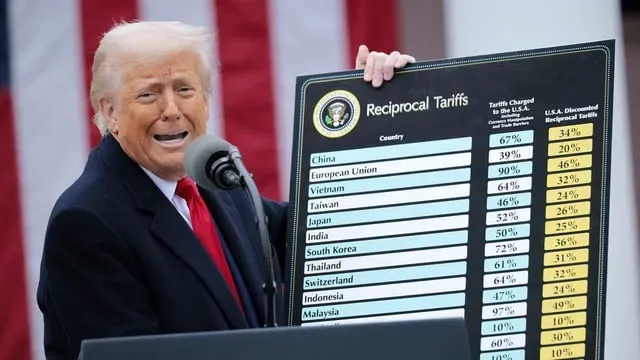
The context here matters. When Trump announced "Liberation Day" in April 2025, Nintendo was one of the first companies to visibly flinch. It delayed Switch 2 pre-orders in the United States, citing the tariff situation and "evolving market conditions," a move that had no real precedent for a major console launch. The Switch 2 eventually launched at $449.99 on June 5, 2025, with Nintendo leaning on Vietnamese manufacturing rather than Chinese to hold that price. Accessories weren't so lucky; the Pro Controller, Joy-Con 2 Pair, and Joy-Con 2 Charging Grip all saw price increases.
The Supreme Court ruled 6-3 last month that Trump's use of the International Emergency Economic Powers Act of 1977 to impose those tariffs was illegal. The U.S. Customs and Border Protection agency had collected roughly $166 billion in duties and deposits under those emergency tariffs. Following the ruling, Trump introduced a new 10% global tariff rate, which is a separate matter entirely. The IEEPA money, though, is sitting in government coffers with no automatic mechanism to return it.
That last point is why Nintendo filed. CBP told the Court of International Trade on Friday that it cannot currently comply with an order to refund the tariffs, citing technical limitations. Reuters reported that CBP said a refund system would be ready in 45 days. Nintendo's lawyers clearly read that and decided a court order was more reliable than a government promise.
Nintendo is far from alone in this. A host of other companies, including FedEx and Costco, have already filed similar suits to recover tariff payments. What makes Nintendo's case slightly different is the specificity of the harm it can document. The Switch 2 pre-order delay was public, the accessory price hikes were public, and the company's statement that it is "the importer of record for goods that were subject to IEEPA Duties" gives it a clean line of standing. Nintendo paid, Nintendo can prove it paid, and Nintendo wants that money back with a premium attached.
Nintendo's official statement to press was exactly four sentences of nothing: "We can confirm that we filed a request. We have nothing else to share on this topic." The lawsuit itself is doing all the talking.
Want to see more? Catch all the latest gaming news, updates, and patch notes right here at XP Gained!